140‐Day QuickBooks Trial Software
Installation Guide
This guide will help you install the 140‐day trial version of QuickBooks that is associated with your textbook. Depending on your textbook, the software may be available via digital download or DVD. This guide includes instructions for installing the software using both methods. Also included are instructions for toggling to the Pro edition of the software, which is necessary for some users. Be sure to check out the Common Questions section at the end of this guide.
|
|
Contents |
|
|
|
| Note! Your QuickBooks trial software is intended for use on a Windows‐based PC. The | |
software cannot be installed mobile devices using the iOS or Android operating system. |
|
Please see this page for more information on system requirements to install QuickBooks. |
Installing QuickBooks – Digital Download
If your trial version of QuickBooks is provided via digital download, you will access the software from the Intuit website.
Before you get started, make sure you have your license number and product number handy.
15‐digit license number: ___ ___ ___ ___ – ___ ___ ___ ___ – ___ ___ ___ ___ – ___ ___ ___
6‐digit product number: (QuickBooks 2014) 602 – 834 (QuickBooks 2015) 503 – 154
1.Close all running programs, including antivirus programs.
Remember to restart your antivirus program(s) after the software installation is complete.
2.Open a web browser and navigate to http://quickbooks.com/download.
These instructions use Internet Explorer. Different web browsers may behave differently.
3.Click the QuickBooks Accountant link for your version of QuickBooks.
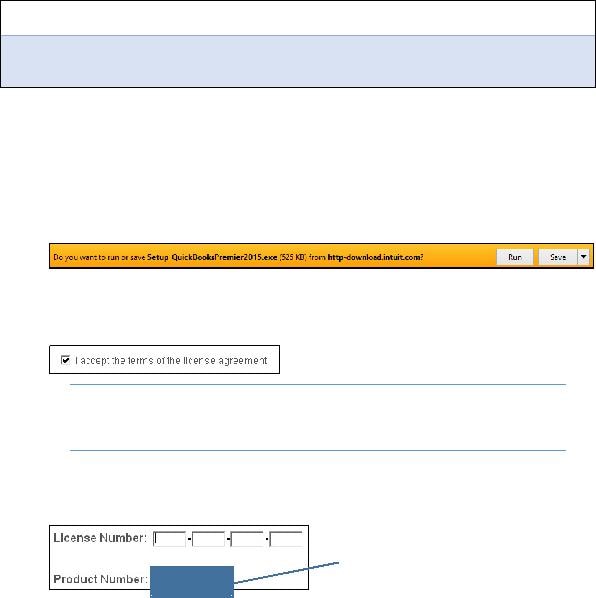
4.Choose the Run option in the download bar, and then choose Yes in the dialog box that appears.
Continue with the next step after the download completes.
5.Click Next in the wizard screen, and then click Next in the Intuit QuickBooks Installer window.
6.Click the checkbox to accept the terms of the license agreement; click Next.
Tip! If desired, use the Print link at the top‐right corner
of the window to print the License Agreement for your records.
7.Ensure that the Express (recommended) installation type is selected; click Next.
The Express installation will place QuickBooks in the default location on your computer.
8.Type your license number and product number in the provided boxes; click Next.
For QuickBooks 2014, use 602‐834.
For QuickBooks 2015, use 503‐153.
9.Click Install.
The installation can take time, so be patient!
10.Click Open QuickBooks in the screen that appears after the installation is complete.
11.If a notice regarding how QuickBooks uses your Internet connection appears, click OK.
The QuickBooks trial software is now installed on your computer.
12.Toggle to the Pro edition of the software, if necessary for your course.
T
Installing QuickBooks – DVD
If your trial version of QuickBooks is provided via DVD, simply follow these steps.
Before you get started, make sure you have your license number and product number handy.
15‐digit license number: ___ ___ ___ ___ – ___ ___ ___ ___ – ___ ___ ___ ___ – ___ ___ ___
6‐digit product number: (QuickBooks 2014) 602 – 834 (QuickBooks 2015) 503 – 154
1.Properly install the installation disc into your computer.
2.Follow the step for your version of Windows:
Windows 7: Click Run setup.exe.
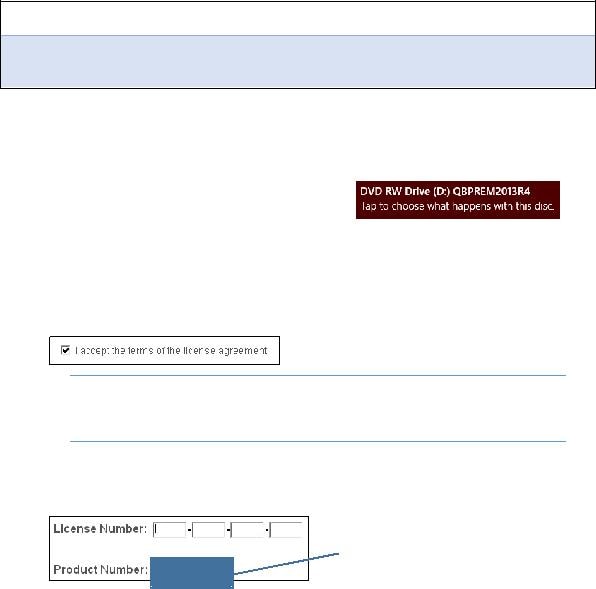
Windows 8.1: Tap the banner that appears at the top‐right corner of the screen and then click Run setup.exe.
3.Click Yes in the User Account Control window.
QuickBooks begins the installation, and the Intuit QuickBooks Installer window will soon display.
4.Click Next in the first screen that appears.
5.Click the checkbox to accept the terms of the license agreement; click Next.
Tip! If desired, use the Print link at the top‐right corner
of the window to print the License Agreement for your records.
6.Ensure that the Express (recommended) installation type is selected; click Next.
The Express installation will place QuickBooks in the default location on your computer.
7.Type your license number and product number in the provided boxes; click Next.
For QuickBooks 2014, use 602‐834.
For QuickBooks 2015, use 503‐153.
8.Click Install.
The installation can take time, so be patient!
9.Click Open QuickBooks in the screen that appears after the installation is complete.
10.If a notice regarding how QuickBooks uses your Internet connection appears, click OK.
The QuickBooks trial software is now installed on your computer.
11.Toggle to the Pro edition of the software, if necessary for your course.
oggle to the Pro Edition
Your trial software of QuickBooks is the Premier Accountant edition. If you are enrolled in a full QuickBooks course using a QuickBooks Pro textbook from Labyrinth Learning, you must align your software version with the textbook.
Note! If you are enrolled in a payroll course using Labyrinth’s Payroll Accounting textbook, you are not required to toggle to the Pro edition.
Before you begin, complete the first Develop Your Skills exercise in your QuickBooks Pro textbook.
1.In QuickBooks, choose File > Toggle to Another Edition.
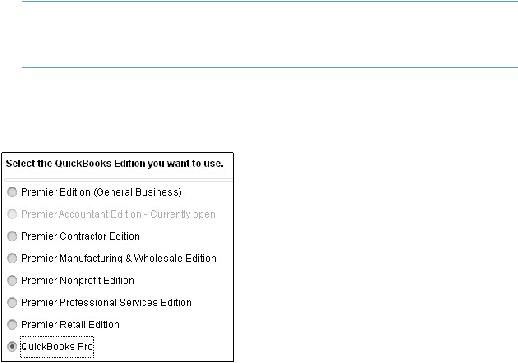
2.Click in the circle to the left of QuickBooks Pro and then click Next.
3.Click Toggle, and then click OK in the Close Accountant Center window.
QuickBooks will close and then reopen in the Pro edition. The title bar will show that you are using the Pro edition “via” the Accountant edition.
Albert Camus Le Mythe De Sisyphe Pdf May 2026
For Camus, Sisyphus' futile labor serves as a metaphor for the human condition. Like Sisyphus, we toil and struggle in our daily lives, often without achieving our goals or finding lasting fulfillment. Our efforts, like Sisyphus', seem ultimately futile in the face of an indifferent and often hostile universe.
Camus argues that Sisyphus' story teaches us to live in the present moment, to focus on the task at hand, rather than getting caught up in thoughts of the past or future. Sisyphus' labor is a never-ending cycle, but it is in the present moment that he finds his freedom. By acknowledging and accepting the absurdity of his situation, Sisyphus is able to find a sense of purpose and fulfillment in the act of pushing the boulder up the mountain.
In Sisyphus' case, he is aware of the futility of his task, yet he continues to push the boulder up the mountain. This determination to act in the face of absurdity is what Camus calls "absurd freedom." Sisyphus is free to choose his own response to his situation, and in choosing to continue his labor, he affirms his own existence and creates his own meaning. albert camus le mythe de sisyphe pdf
Camus argues that the human desire for meaning and purpose in life is at odds with the apparent indifference of the universe. This conflict gives rise to the concept of the "absurd," which Camus defines as the confrontation between humanity's desire for significance and the universe's silence. The absurd is the fundamental condition of human existence, and it is up to each individual to confront and respond to it.
In "The Myth of Sisyphus," Camus offers a profound and insightful exploration of the human condition. Through the myth of Sisyphus, he shows us that, despite the absurdity and futility of our existence, we have the freedom to choose our own response, to create our own meaning, and to live in the present moment. As Camus famously concludes, "One must imagine Sisyphus happy" – for in his determination to continue his labor, despite its futility, Sisyphus finds a sense of purpose and fulfillment that is uniquely his own. For Camus, Sisyphus' futile labor serves as a
In Albert Camus' philosophical essay, "The Myth of Sisyphus," the French philosopher explores the themes of absurdity, existentialism, and the human condition. At the heart of the essay is the myth of Sisyphus, a figure from ancient Greek mythology who is condemned to roll a massive boulder up a mountain, only to have it roll back down, requiring him to begin the task anew.
You can find the PDF version of "The Myth of Sisyphus" by Albert Camus online, and I encourage you to read the full essay to explore these themes and ideas in more depth. Camus argues that Sisyphus' story teaches us to
For Camus, Sisyphus' revolt against the gods, his determination to continue his labor despite its futility, is a powerful symbol of human resilience and defiance. In the face of absurdity, Sisyphus chooses to revolt, to create his own meaning and purpose, rather than succumbing to despair or resignation.