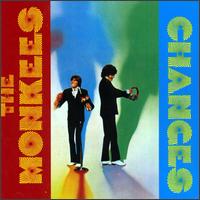
his best. Jones' contributions are in a pleasant bubblegum style, avoiding the histrionics of some of his earlier efforts. "All Alone in the Dark" is a particular highlight. On its own merits, CHANGES is fine early '70s bubblegum. (VH1.com)
Botw Update 160 Exclusive Online
And there were small, ineffable miracles: Link stood at the edge of a cliff watching the sea spill into a sky newly lit with aurora when a child from a coastal village waved at him across the waves. They had both earned the same badge by mending the same ruined net. Somewhere else, a formerly solitary blacksmith found steady company as customers left plants rather than coin. The new items were small and often sentimental—a ribbon, a tune, a tiny toy that could be placed on shrine altars—but their meaning accrued. The update changed the way people kept track of their days.
As the weeks folded into months, the exclusive content began to feel less like a gated treasure and more like a living festival. Seasonal variations arrived—wind patterns changed according to the new tasks completed by the public; a shrine that would not open revealed itself to an individual after they had rebuilt three weather-beaten porches; a recipe once lost to a village grandmother’s cupboard reappeared when ten strangers agreed to learn it together. The update seeded micro-communities: repair crews that crossed the breadth of Hyrule, storytelling circles that swapped quest notes like recipes, traveling bands that performed dances inspired by the weather effects unlocked from collaborative effort.
On the night of the first anniversary of the update’s arrival, Hyrule’s skies were full of lanterns. Small fires burned atop newly mended towers and bonfires in rebuilt plazas. Bandits and knights, merchants and scholars, fishermen and wind-weavers—all had, in varying measures, touched some part of the update. Link stood with a companion who had once been only a rumor—a gentle, shaggy beast whose loyalty had been bought in persistence rather than claimed in conquest. It nudged his hand, and for a moment everything felt stitched. The exclusive moniker was still there, clipped to the update’s title like a note in the margin, but the meaning had softened.
The center of the clearing held an artifact that was both obvious and ludicrous: a console carved from the same stone as the shrines, inset with ribbons of light that did not belong to anyone’s memory. Where a screen might have been on old devices, this thing showed a living map that breathed. Words that were not words rippled across it, language approximating meaning: "Exclusive," it seemed to say, "is not merely denial. It is curation." botw update 160 exclusive
Rumors, stubborn as weeds, reshaped themselves. Update 160 Exclusive had been billed at first as a prize for the elite. But by design or accident, it became an engine for reweaving community lines. The exclusivity was less about excluding and more about asking: who do you fix the world for? The update left Hyrule not more stratified but oddly more intimate. In the way of all good software and all good stories, it encouraged patching—of bridges, of promises, of the small cruelties that people do to one another by neglect.
The road to the update wasn’t a road at all. It was a scavenger’s trail stitched together from half-forgotten tasks and the debris of Hyrule’s long recovery. One had to trace the old errands: mend a bridge for a merchant, deliver a stew to an elder with stories that had already loosened at the edges, light a lantern at the shrine of a minor deity who cared only for honesty. Each act of small repair unfurled a sliver more of the map. Each kindness—seldom dramatic, often mundane—like changing a burnt wick or untangling a fishing line, was a key in itself, a token the unseen sentry inspected before releasing the next clue.
But the update’s exclusive bit was not a locked shop. Its exclusivity was a mirror held up to Hyrule’s renewed social fabric: invitations issued not to the richest or fiercest but to those whose lives threaded the kingdom together. The update recognized labor and generosity and insisted that content unlocked only for those who had given their small, true pieces of themselves to the world. It rewarded the quiet, the steady, the stubbornly kind. It gave Zahra a braid of wind silk that let her weave storms into cloth; Kilton a patchwork orb that wriggled and made shadow puppets of monsters; the fisher a lure that returned not fish but forgotten memories of days spent by the water. Link, with his steady hand and steady heart, was given a map that glowed only when its bearer repaired something—be it a bell, a bridge, or a promise. And there were small, ineffable miracles: Link stood
Not all were pleased. In towns where the idea of exclusivity was still measured by coin and conquest, tempers flared. There were those who stalked the edges of the newly-formed coves and argued that a game’s mysteries should not hinge on niceties. Their protests were loud and sometimes persuasive, but the update had an odd immunity: it could not be encouraged by rant, only by small, persistent work. Those who sulked away found, in the hollow left by their absence, a different kind of peace—no patch of communal work required of them, no gentle chiding from the map. The update did its strange balancing act: it gave to some and offered lessons to others.
No one could say who held the key. Some swore it was in the clumsy hands of Kilton, who laughed too loudly and hid his maps beneath jars of monster extract. Others swore it lay secret with a collector of relics in Gerudo Town, a woman known only as Zahra who traded linens and rumors in equal measure. But across forests and across cliff-scarred ridgelines, the same shape of question grew: who would earn the right to open the update and what would it change?
Kilton, with a ceremonious cough and an overdramatic flourish, offered his contraption. Zahra laid a palm on the stone and closed her eyes. The scholar read aloud a passage from a book no one had seen in decades—an instruction manual for patience, if such a thing could be printed—and the youth recited a list of names: people who had been lost to time and those who had returned. The new items were small and often sentimental—a
The first sign came to those awake at midnight—an odd pattering across the roofs like distant rainfall though the sky was dry. For the few who rose and looked east, there was a shimmer: a thin, auroral seam appearing along the horizon where the Great Plateau met the breathing dark. It pulsed once, like someone hitting the edge of a bowl with a joy-bent spoon, and then a sound like a thousand chimes sent an inaudible invitation through the hills. It threaded itself into Link’s dreams: a corridor of light opening beneath an ancient oak. He woke on his haunches, the old instincts of a guardian quick in his bones, and he went.
At the heart of it, Update 160 Exclusive had been a mirror and a lens both. It reflected Hyrule’s imperfections back at its people and magnified the small acts that made living together possible. It was exclusive because it required the world to be made better in order to be opened; it was generous because in doing so, it made the world more generous, too.
When travelers wandered back through the stables months later, they’d tell different versions of the story: some grand, some small. Children would whisper about the map that glowed only for the kind-hearted; elders would nod, remembering how, for once, an update taught more than it gave. And on nights when the aurora stitched itself along the horizon, those who had never been invited might still sit on a hill and listen, imagining a cracked screen healed by a thousand ordinary hands.
By the time Link reached the clearing marked by the ash of a long-dead elm, twilight had bled into a galaxy of cold lights. Zahra was there, as if summoned by the same rumor, with a blanket slung over her shoulders and a crate of woven trinkets. Nearby, a scruffy man with a laugh like popped leather—Kilton—fidgeted with a device that smoked politely and hummed with a tone that matched his grin. Around them gathered several others: a youth who had once stolen a loaf and later returned everything with interest, a scholar with ink-stained hands, a fisher whose nets carried small, impossible things at the bottom.
It felt, for a time, like a game of patience. Some people grew angrier than patient—there were those who burned their bridges expecting the route to cleave open at the shout of a coin. Others found in the slow assembling of the journey the startling reward itself: unremarkable acts deepening their claim on Hyrule, re-remembering the tender architecture of community. Even Ganon's old turrets, for a few brief days, watched more closely as folks who never spoke to one another traded seeds and stories like currency.
From their debut in 1966 to their final reunion as a quartet, The
Monkees have recorded 11 original studio albums. Here you will find
information & tracklistings for each album.
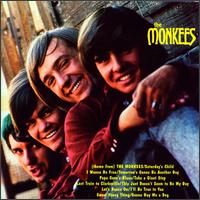
The Monkees
Micky Dolenz/Davy Jones/Peter Tork/Mike Nesmith
Created to perform roles in a television series, the Monkees were greeted with scepticism by certain sections of the rock fraternity. The quartet may not have played the instruments on their debut album, but this does not diminish the appeal of its content. Excellent songs by Tommy Boyce and Bobby Hart formed its core, while contributions by Carole King, David Gates and group member Mike Nesmith ensure that the quality remains
consistently high. Micky Dolenz possesses the ideal pop
Produced By: Tommy Boyce, Bobby Hart, Jack Keller, Mike Nesmith
Highest Chart Status: #1
Colgems # COS-101 (10/66)
Rhino # RNLP - 70140 (6/86)
Rhino # R2 - 71790 (9/20/94)
1.) (Theme From) The Monkees
2.) Saturday's Child
3.) I Wanna Be Free
4.) Tomorrow's Gonna Be Another Day
5.) Papa Gene's Blues
6.) Take A Giant Step
7.) Last Train To Clarksville
8.) This Just Doesn't Seem To Be My Day
9.) Let's Dance On
10.) I'll Be True To You
11.) Sweet Young Thing
12.) Gonna Buy Me A Dog
13.) I Can't Get Her Off My Mind (Rhino Bonus Track)
14.) I Don't Think You Know Me (Rhino Bonus Track)
15.) (Theme From) The Monkees (Rhino Bonus Track)
voice and the enthusiasm generated on each performance is completely captivating. The Monkees' grasp of teen angst and melodrama is sure and, now divorced from contemporary travails, this album stands as one of the era's most entertaining debuts. (VH1.com)
Produced By: Tommy Boyce, Bobby Hart, Jack Keller, Mike Nesmith, Neil Sedaka, Carole Bayer, Jeff Barry, Gerry Goffin, Carole King
Highest Chart Status: #1
Colgems # COS-102 (1/10/67)
Rhino # RNLP 70142 (5/86)
Rhino # R2 - 71791 (11/15/94)
1.) She
2.) When Love Comes Knockin' (At Your Door)
3.) Mary, Mary
4.) Hold On Girl
5.) Your Auntie Grizelda
6.) (I'm Not Your) Steppin' Stone
7.) Look Out (Here Comes Tomorrow)
8.) The Kind Of Girl I Could Love
9.) The Day We Fall In Love
10.) Sometime In The Morning
11.) Laugh
12.) I'm A Believer
13.) Don't Listen To Linda (Rhino Bonus Track)
14.) I'll Spend My Life With You (Rhino Bonus Track)
15.) I Don't Think You Know Me (Rhino Bonus Track)
16.) Look Out (Here Comes Tomorrow) (Rhino Bonus
Track)
17.) I'm A Believer (Rhino Bonus Track)
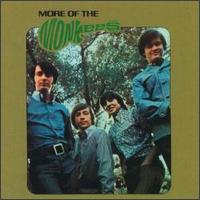
More of The Monkees
Micky Dolenz/Davy Jones/Peter Tork/Mike Nesmith
1967's "More Of The Monkees," the group's second album, was by all accounts immensely disliked by the Monkees themselves, particularly Michael Nesmith (who once called it "probably the worst album in the history of the world"). Much of the group's distaste for the record can be attributed simply to their lack of involvement in its creation, as it was assembled largely without their input. But for those of us on the outside looking in, time has been very kind to "More Of The Monkees." There are a few
1.) You Told Me
2.) I'll Spend My Life With You
3.) Forget That Girl
4.) Band 6
5.) You Just May Be The One
6.) Shades Of Gray
7.) I Can't Get Her Off My Mind
8.) For Pete's Sake
9.) Mr. Webster
10.) Sunny Girlfriend
11.) Zilch
12.) No Time
13.) Early Morning Blues And Greens
14.) Randy Scouse Git
15.) All Of Your Toys (Rhino Bonus Track)
16.) The Girl I Knew Somewhere (Rhino Bonus Track)
17.) Peter Gunn's Gun (Rhino Bonus Track)
18.) Jericho (Rhino Bonus Track)
19.) Nine Times Blue (Rhino Bonus Track)
20.) Pillow Time (Rhino Bonus Track)
Produced By: Douglas Farthing Hatlelid
Highest Chart Status: #1
Colgems # COS-103 (5/22/67)
Rhino # RNLP - 70143 (5/86)
Rhino # R2 - 71792 (1/24/95)
is magnificent REVOLVER-influenced psychedelic pop. Dolenz's own "Randy Scouse Git" is an impressionistic, trippy delight. Perhaps the album's best track is the Davy Jones lead "Early Morning Blues and Greens," a moody slice of atmospheric pop. Even oddities like "Band 6" and "Zilch" are interesting ephemera. This reissue features six interesting alternate takes and demos. (VH1.com)
Headquarters
Micky Dolenz/Davy Jones/Peter Tork/Mike Nesmith
One of the Monkees' two best albums, HEADQUARTERS is also the one '60s album on which the band played nearly all the instruments, save for a string section and occasional bass from producer Chip Douglas. Since Michael Nesmith had instigated the revolt that led to the band's musical independence, he's in the forefront here, and his songs are uniformly excellent. The banjo-driven "You Told Me" and "Sunny Girlfriend" are two of his best country-influenced tunes, and "You Just May Be the One"
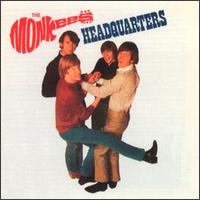
1.) Salesman
2.) She Hangs Out
3.) The Door Into Summer
4.) Love Is Only Sleeping
5.) Cuddly Toy
6.) Words
7.) Hard To Believe
8.) What Am I Doing Hangin' 'Round?
9.) Peter Percival Patterson's Pet Pig Porky
10.) Pleasant Valley Sunday
11.) Daily Nightly
12.) Don't Call On Me
13.) Star Collector
14.) Special Announcement (Rhino Bonus Track)
15.) Goin Down (Rhino Bonus Track)
16.) Salesman (Rhino Bonus Track)
17.) The Door Into Summer (Rhino Bonus Track)
18.) Love Is Only Sleeping (Rhino Bonus Track)
19.) Daily Nightly (Rhino Bonus Track)
20.) Star Collector (Rhino Bonus Track)
Produced By: Chip Douglas
Highest Chart Status: #1
Colgems # COS-104 (11/14/67)
Rhino # RNLP - 70141 (6/86)
Rhino # R2 - 71793 (1/24/95)
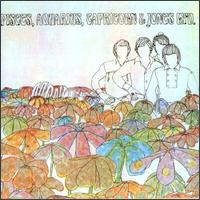
Pisces, Aquarius, Capricorn, & Jones, Ltd.
Micky Dolenz/Davy Jones/Peter Tork/Mike Nesmith
By 1967's PISCES, AQUARIUS, CAPRICORN & JONES LTD., the band had found a balance between writing and performing their own material, and utilizing the talents of their Los Angeles songwriting teams and studio musicians. The result is an artistically satisfying mix of progressive experimentalism and pop smarts; the Moog synthesizer on the tracks "Daily Nightly," "Love Is Only
Sleeping," and the groupie anthem "Star Collector," was the first ever to appear on a pop album. Besides the enormous hit "Pleasant Valley Sunday," highlights include the simply beautiful jazz-pop of Michael Nesmith's "Don't Call On Me," and the atmospheric and lovely "Words," featuring Peter Tork's best-ever vocals. The entire album is superb, and the handful of alternate takes and outtakes are nearly its equal. A '60s pop classic. (VH1.com)
The Birds, The Bees &
The Monkees
Micky Dolenz/Davy Jones/Peter Tork/Mike Nesmith
The Monkees' fifth album was more or less the result of individual efforts of Nesmith, Dolenz, Jones, and Tork being combined into one record and released under the Monkees label. This becomes somewhat obvious as the transition from song to song is rough, though the singles remain excellent. One pro to this haphazard attachment is its allowance for Davy's songwriting efforts to gain more
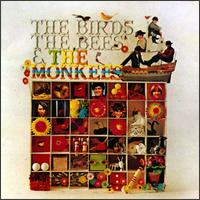
acceptance. Whereas his broadway-styled "Hard To Believe" stuck out like a sore thumb on Pisces, "Dream World" opens this album with a bang, and arguably remains his second-best song behind "I'll Love You Forever." With Nesmith also reaching a self-indulgent and experimental period, The Birds, The Bees, and the Monkees is an interesting collection of songs, most of which-- except for "Daydream Believer" and "Valleri"-- have unfortunately been forgotten. The Birds, The Bees, and the Monkees was originally to be a two-record set. However, when it was determined that one record would be more economic, half of the intended songs got cut. Somehow, this included all of Peter's efforts. The bonus selections, fortunately, show off one of his greatest songs, "Lady's Baby." Two of the others, "Long Title" and "Can You Dig It," would later be included on "Head." - Mike Landsberg
1.) Dream World
2.) Auntie's Municipal Court
3.) We Were Made For Each Other
4.) Tapioca Tundra
5.) Daydream Believer
6.) Writing Wrongs
7.) I'll Be Back Up On My Feet
8.) The Poster
9.) P.O. Box 9847
10.) Magnolia Simms
11.) Valleri
12.) Zor And Zam
13.) Alvin (Rhino Bonus Track)
14.) I'm Gonna Try (Rhino Bonus Track)
15.) P.O. Box 9847 (Rhino Bonus Track)
16.) The Girl I Left Behind Me (Rhino Bonus Track)
17.) Lady's Baby (Rhino Bonus Track)
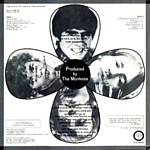
Produced By: The Monkees & Chip Douglas
Highest Chart Status: #3
Colgems # COS-109 (4/22/68)
Rhino # RNLP - 144 (1985)
Rhino # R2 - 71794 (9/20/94)
Head
Micky Dolenz/Davy Jones/Peter Tork/Mike Nesmith
"Head," the 1968 soundtrack to the Monkees only movie (so far), remains as loopy and weird as the film itself. Amidst a collage of audio snippets from the movie, six actual songs emerge. Chief among these is the gorgeous Goffin-King "Porpoise Song," which is one of the most majestic tracks ever done under the Monkees' aegis. Each of the six songs on "Head" is a worthy effort, but "Porpoise Song" and the lovely Goffin-King "As We Go Along" simply tower above the rest. Of the other songs,
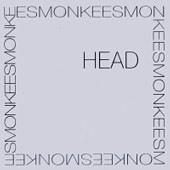
Jones's much-maligned take on Nilsson's "Daddy's Song" is a perfectly engaging guilty pleasure, Nesmith's studio "Circle Sky" lacks the bite of the now-familiar live version (included as one of the bonus tracks here) and Tork's "Long Title: Do I Have To Do This All Over Again" and "Can You Dig It" (the latter sung by Dolenz) offer a heavier sound than that usually associated with the Monkees. And, although not really a song, "Ditty Diego -- War Chant" deconstructs the Monkees' image, origins, career and reasons for existing with hysteric delight. Aside from the live "Circle Sky," other bonus tracks include a revealing early work-in-progress version of "Ditty Diego -- War Chant" (coached by "album coordinator" Jack Nicholson), replete with an extra verse and uncluttered by varispeed effects. There's also a Tork-sung version of "Can You Dig It," a Nesmith-sung version of "Daddy's Song," a rendition of "Happy Birthday To You" from the movie and a "Head" radio spot. In its expanded form, "Head" remains a trip. (Though it's too bad Rhino couldn't figure out a way to reproduce the original album's mylar-mirror cover. Or maybe not.) --- Carl Cafarelli
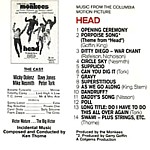
Produced By: The Monkees & Gerry Goffin
Highest Chart Status: #45
Colgems # COSO-5008 (12/1/68)
Rhino # RNLP - 145 (1985)
Rhino # R2 - 71795 (11/15/94)
1.) Through The Looking Glass
2.) Don't Listen To Linda
3.) I Won't Be The Same Without Her
4.) Just A Game
5.) Me Without You
6.) Don't Wait For Me
7.) You And I
8.) While I Cry
9.) Tear Drop City
10.) The Girl I Left Behind Me
11.) A Man Without A Dream
12.) Shorty Blackwell
13.) Someday Man (Rhino Bonus Track)
14.) Carlisle Wheeling (Rhino Bonus Track)
15.) Rosemarie (Rhino Bonus Track)
16.) Smile (Rhino Bonus Track)
17.) St. Matthew (Rhino Bonus Track)
18.) Me Without You (Rhino Bonus Track)
19.) Through The Looking Glass (Rhino Bonus Track)
Produced By: Tommy Boyce, Bobby Hart, Mike Nesmith, Micky Dolenz, Davy Jones, Carol Bayer, Neil Sedaka, Bones Howe
Highest Chart Status: #32
Colgems # COS-113 (2/15/69)
Rhino # RNLP - 146 (1985)
Rhino # R2 - 71796 (1/24/95)
Instant Replay
Micky Dolenz/Davy Jones/Mike Nesmith
The Monkees' first album without Peter Tork, 1969's INSTANT REPLAY is a somewhat confused but ultimately successful blend of three very different musical styles. Micky Dolenz's obvious fondness for psychedelic pop and R&B grooves, Michael Nesmith's increasingly country-oriented tunes, and Davy Jones' music hall aspirations will strike the listener as either incongruous or charmingly contrasting when heard in toto. The should-have-been-a-hit "Through the Looking Glass" is a Dolenz highlight, but his
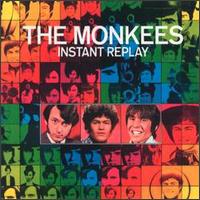
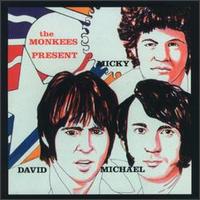
The Monkees Present
Micky Dolenz/Davy Jones/Mike Nesmith
The best of the Monkees' later albums, THE MONKEES PRESENT was originally conceived as a two-LP set, with each of the band's four members given an entire side to himself. This plan was scuttled when Peter Tork left the group in early 1969, but the finished album has a similar feel. The 12 tracks from the original release feature four songs each by Davy Jones, Mike Nesmith and Micky Dolenz, who appear only on their own cuts. As always, Nesmith's songs stand out, with the countryish "Good
Clean Fun," Michael Martin Murphy's "Oklahoma Backroom Dancer," and the anthemic "Listen To The Band" particularly noteworthy. Two Dolenz originals, the oddly jazzy "Little Girl" and the just plain odd "Mommy and Daddy," are among his very best; bonus tracks include an early version of the latter with strident political lyrics that raise eyebrows even today. (VH1.com)
1.) Little Girl
2.) Good Clean Fun
3.) If I Knew
4.) Bye Bye Baby Bye Bye
5.) Never Tell A Woman Yes
6.) Looking For The Good Times
7.) Ladies Aid Society
8.) Listen To The Band
9.) French Song
10.) Mommy And Daddy
11.) Oklahoma Backroom Dancer
12.) Pillow Time
13.) Calico Girlfriend Samba (Rhino Bonus Track)
14.) The Good Earth (Rhino Bonus Track)
15.) Listen To The Band (Rhino Bonus Track)
16.) Mommy And Daddy (Rhino Bonus Track)
17.) The Monkees Present Radio Promo (Rhino Bonus
Track)
Produced By: Tommy Boyce, Bobby Hart, Mike Nesmith, Micky Dolenz, Davy Jones, Bill Chadwick
Highest Chart Status: #100
Colgems # COS-117 (10/11/69)
Rhino # RNLP - 147 (1985)
Rhino # R2 - 71797 (11/15/94)
1.) Oh My My
2.) Ticket On A Ferry Ride
3.) You're So Good To Me
4.) It's Got To Be Love
5.) Acapulco Sun
6.) 99 Pounds
7.) Tell Me Love
8.) Do You Feel It Too?
9.) I Love You Better
10.) All Alone In The Dark
11.) Midnight Train
12.) I Never Thought It Peculiar
13.) Time And Time Again (Rhino Bonus Track)
14.) Do It In The Name Of Love (Rhino Bonus Track)
15.) Lady Jane (Rhino Bonus Track)
Produced By: Jeff Barry, Tommy Boyce, Bobby Hart, Micky Dolenz
Highest Chart Status: #152 (1986; didn't chart 1970)
Colgems # COS-119 (6/70)
Rhino # RNLP - 70148 (9/86)
Rhino # R2 - 71798 (9/20/94)
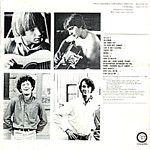
Changes
Micky Dolenz/Davy Jones
By 1970's CHANGES, of the original four Monkees only Micky Dolenz and Davy Jones were left. Their participation here is limited to vocals and one Dolenz songwriting credit for "Midnight Train," a song which had actually appeared during the TV show's first season back in 1966. While CHANGES doesn't compare to classic Monkees albums like PISCES AQUARIUS CAPRICORN AND JONES, LTD., Dolenz's voice is more R&B-influenced than ever, and his lead vocal on Jeff Barry's "Oh My My" is among
Produced By: Roger Bechirian
Highest Chart Status: #72
Rhino # RNIN/RNCD - 70706 (8/1/87)
Rhino # R2 - 72154 (10/24/95)
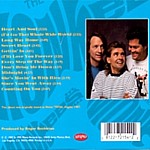
1.) Heart & Soul
2.) I'd Go The Whole Wide World
3.) Long Way Home
4.) Secret Heart
5.) Gettin' In
6.) (I'll) Love You Forever
7.) Every Step Of The Way
8.) Don't Bring Me Down
9.) Midnight
10.) She's Movin' In With Rico
11.) Since You Went Away
12.) Counting On You
not dire in the least. Choosing postpunk veteran Roger Bechirian (Elvis Costello, The Undertones) to produce helped keep the '80s-style slickness at manageable levels, and also improved the choice of covers--a version of Wreckless Eric's "Whole Wide World" is particularly inspired. Apart from a few missteps (though no more than on most of the group's '60s albums), not bad at all. (VH1.com)
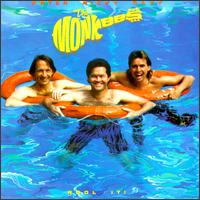
Pool It!
Micky Dolenz/Davy Jones/Peter Tork
In 1986, The Monkees' TV show was resurrected on MTV, and the band went from being a rock-hipster joke to a well-respected example of classic '60s pop. A greatest hits collection, featuring three new tracks by Micky Dolenz and Peter Tork, and a full slate of reissues of the band's original albums all sold well, and a concert tour was a big success. And so three of the Monkees--Michael Nesmith declined to participate--went into the studio to record a full reunion album. The results were, surprisingly,
Justus
Micky Dolenz/Davy Jones/Peter Tork/Mike Nesmith
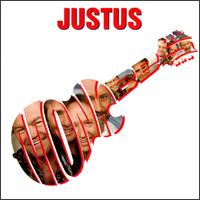
In their original incarnation, The Monkees released only one album on which they played all the instruments (save the occasional string or brass part) themselves, 1967's HEADQUARTERS. This makes their aptly-named 1996 reunion album all the more admirable, as here, the four Monkees--who had not played in the same room at the same time since 1968--indeed play every instrument. Opening with an impressive take on the absent Michael Nesmith's "Circle Sky," which was originally recorded for
the soundtrack to their ill-fated movie HEAD, the set contains only one other Nesmith composition, the endearingly odd "Admiral Mike." The rest was written, separately, by Micky Dolenz, Davy Jones and Peter Tork. Each sings lead on his own songs, but unlike such similarly-structured albums as THE MONKEES PRESENT, the stripped-down, almost punky arrangements and loose playing of JUSTUS give the album a remarkable cohesion. (VH1.com)
6.) Admiral Mike
7.) Dying of A Broken Heart
8.) Regional Girl
9.) Run Away From Life
10.) I Believe You
11.) It's My Life
12.) It's Not Too Late
Produced By: The Monkees
Highest Chart Status: Didn't Chart
Rhino # R2 - 72542 (10/15/96)
1.) Opening Ceremony
2.) Porpoise Song (Theme From Head)
3.) Ditty Diego-War Chant
4.) Circle Sky
5.) Supplicio
6.) Can You Dig It?
7.) Gravy
8.) Superstitous
9.) As We Go Along
10.) Dandruff?
11.) Daddy's Song
12.) Poll
13.) Long Title: Do I Have To Do This All Over Again?
14.) Swami
15.) Ditty Diego-War Chant (Rhino Bonus Track)
16.) Circle Sky (Rhino Bonus Track)
17.) Happy Birthday To You (Rhino Bonus Track)
18.) Can You Dig It? (Rhino Bonus Track)
19.) Daddy's Song (Rhino Bonus Track)
20.) Head Radio Spot (Rhino Bonus Track)
closing song, "Shorty Blackwell," may be the most divisive tune in the band's oeuvre. Some find the long, impressionistic tune unbearably pretentious, while others think it's an amusing, trippy, undeniably weird song not far removed from Van Dyke Parks' then-new album SONG CYCLE. The bonus tracks include a terrific version of Nesmith's "Carlisle Wheeling." (VH1.com)
Page URL: http://www.monkeesrule43.com/
originals.html
Site Best Viewed With:
Internet Explorer / Medium text size / 800x600 screen resolution / Javascript enabled / Flash installed
Disclaimer:
All photos are property of their respective owners / All content is © Monkeesrule43 Online unless otherwise noted.
Didn't find the information you were looking for? Want to send comments or suggestions?
Email the Webmaster at: